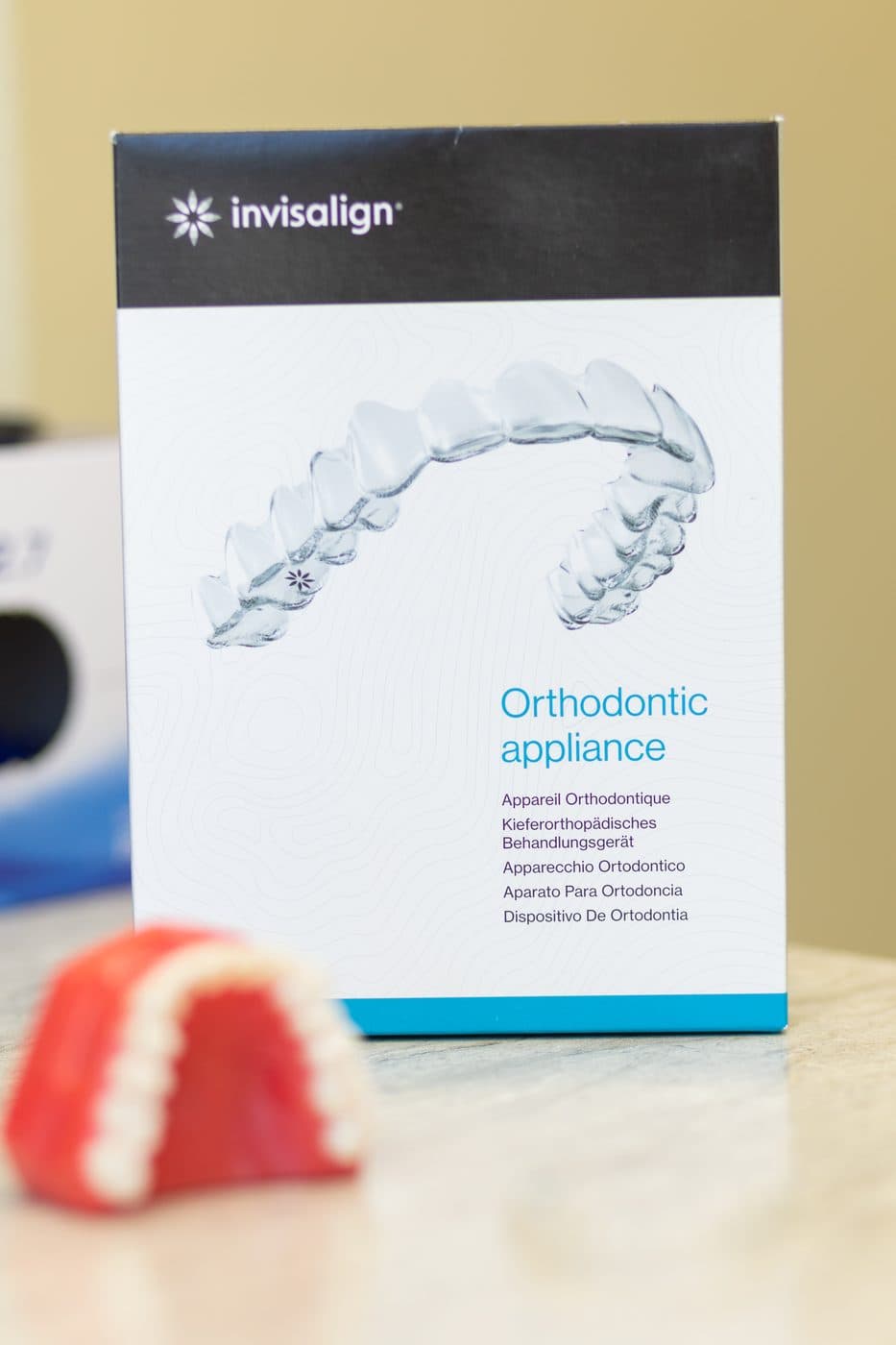
The short version
Adults make great Invisalign patients as long as their teeth and gums are healthy. Treatment often takes around 12 to 18 months, with a new set of aligners about every two weeks and short check-ins every several weeks. You wear the trays most of the day and night and take them out to eat. The cost depends on how much your teeth need to move, and some dental plans include an orthodontic benefit.
In this guide
- Am I too old for Invisalign?
- What can Invisalign fix?
- Why adults straighten their teeth
- How treatment works
- How long does Invisalign take for adults?
- Daily life with aligners
- What if I lose or break an aligner?
- Invisalign or braces as an adult?
- Invisalign or mail-order aligners?
- What does Invisalign cost, and does insurance help?
- After Invisalign: keeping the result
Am I too old for Invisalign?
No. Teeth can move at any age as long as the bone and gums supporting them are healthy. What matters more than age is gum health, the condition of your fillings and crowns, and whether you'll actually wear the aligners.
That's why treatment starts with an exam. If there's gum disease, active decay, or a tooth that needs work, we take care of that first. Moving teeth in unhealthy gums can make things worse.
What can Invisalign fix?
Clear aligners can treat a wide range of problems, including:
- Crowded or overlapping teeth
- Gaps between teeth
- Overbite and underbite
- Crossbite
- Open bite
- Teeth that shifted after braces as a teen, often because a retainer stopped being worn
Some corrections need small tooth-colored bumps called attachments bonded to certain teeth, or small elastics, to help the aligners grip and push. They're less invisible than the trays but still subtle.
Very complex bite problems, or ones involving the position of the jaw, may be better treated with braces or another approach. We offer both Invisalign and traditional braces, so we can tell you honestly which fits your case.
Why adults straighten their teeth
It's not only about looks. Crowded teeth are harder to clean, which can raise the risk of cavities and gum problems. A bite that's off can wear teeth unevenly and add strain. Straightening can also make later work, like a crown or an implant, easier to do well.
And for many people it's simply the thing they've wanted for years. That's a good enough reason.
How treatment works
- An exam and x-rays to make sure your teeth and gums are ready.
- A digital scan of your teeth. No goopy putty trays.
- A treatment plan that shows how your teeth are planned to move, stage by stage.
- Your first aligners, with a walk-through of how to put them in, take them out and clean them.
- A new set about every two weeks, and short check-ins every several weeks to make sure you're on track.
- Retainers when you finish, to keep your teeth where they ended up.
At our Mesquite office, both doctors offer Invisalign and braces.
How long does Invisalign take for adults?
Many adults finish in about 12 to 18 months. Mild cases can be shorter, sometimes around six months, and complex ones can take longer. Your plan will include an estimate.
The biggest factor you control is wear time. The aligners only work when they're in, and most plans call for wearing them about 20 to 22 hours a day. Leaving them out for long stretches slows things down and can mean extra aligners.
Daily life with aligners
- Eating: take the aligners out for meals and snacks, then brush, or at least rinse, before putting them back.
- Drinking: plain water is fine with them in. Take them out for coffee, soda, juice and anything hot or sugary, which can stain the trays or trap sugar against your teeth.
- Speech: many people notice a slight lisp for the first few days with a new set. It usually fades as your tongue adjusts. Reading out loud helps.
- Soreness: each new set feels tight for a day or two. That's the pressure that moves teeth. Switching to a new set at bedtime can help.
- Cleaning: rinse the trays when you take them out and brush them gently with cool water. Hot water can warp them.
- Storage: always use the case. Most lost aligners end up wrapped in a napkin and thrown away.
What if I lose or break an aligner?
Call us. Depending on where you are in treatment, we may have you go back to your previous set or move ahead to the next one while a replacement is made. Don't go days without wearing any aligner, because teeth can start drifting back.
Replacement aligners may have a cost, and repeated lost or unworn trays can add to the overall price. The case is cheaper.
Invisalign or braces as an adult?
For most adults the choice comes down to lifestyle and the kind of movement needed. Aligners are hard to notice, come out for meals and cleaning, and mean fewer and shorter visits. They depend on you wearing them.
Braces are fixed in place, so wear time isn't up to you, and they can handle some complex movements more predictably. Some adults choose them for exactly that reason. Both can give an excellent result in the right case, and we'll tell you if one clearly fits you better.
Invisalign or mail-order aligners?
Mail-order aligners can cost less because you skip the in-person exam and the check-ins. That's also the risk. No one checks your gums, cavities or bone before teeth start moving, and no one catches a problem early if things go off track. Moving teeth in unhealthy gums can loosen them.
With Invisalign here, a dentist examines you first, plans the movement, and checks your progress in person. If you've already tried mail-order aligners and something doesn't feel right, come in and we'll take a look.
What does Invisalign cost, and does insurance help?
The price depends on how much movement your teeth need, whether one or both arches are treated, how many aligners the plan requires, and whether you need attachments or elastics. You'll have the full number in writing before you start.
Some dental plans include an orthodontic benefit, usually with a lifetime maximum, and some cover adults as well as kids. It's worth checking. We'll look at your plan and show what's expected to be covered. How dental insurance works explains lifetime maximums and waiting periods.
Sunbit and Cherry let you split treatment into monthly payments. A flexible spending or health savings account may also help if you have one.
After Invisalign: keeping the result
Teeth tend to drift back after any kind of straightening, which is why the retainer matters. Most people wear it full time at first and then only at night. Plan on nighttime retainer wear for the long term. It's the easiest way to protect what you paid for.
This guide is general information, reviewed by Dr. Diana Vazquez. It isn't a diagnosis or a substitute for an exam. If something hurts or looks wrong, call (972) 288-3200.