Invisalign clear aligners
What we do
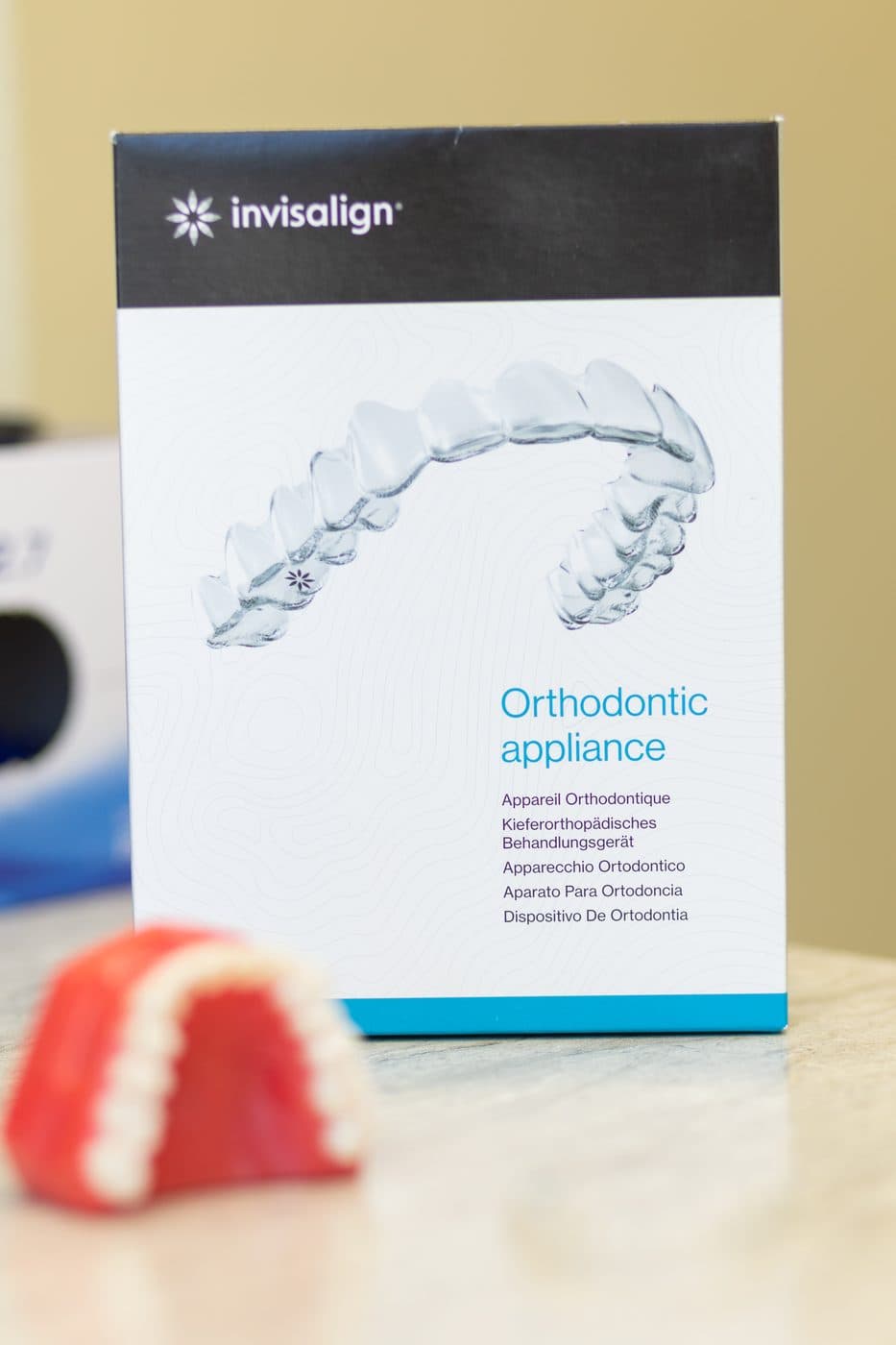
Invisalign straightens teeth with a series of clear, removable trays instead of brackets and wires. Each set moves your teeth a small, planned amount, and you switch to the next set about every two weeks. It's for teens and adults with crowding, gaps, or bite problems who want treatment that's hard to notice and easy to live with. Here's how it works at our Mesquite office, how long it takes, and how the cost comes together.
How does Invisalign work?
Each aligner is a thin, clear tray shaped slightly differently from the one before. When you snap a new one in, it presses gently on specific teeth, and over about two weeks those teeth shift to match it. Then you move to the next tray. Step by step, the series walks your teeth from where they are to where the plan says they should end up.
Some cases need small tooth-colored bumps, called attachments, bonded to a few teeth. They give the aligner something to grip so it can turn or lift a tooth. Some bite corrections also use small elastics between the top and bottom trays. Attachments and elastics are more visible than the aligners themselves, and we'll tell you up front if your plan needs them.
What can Invisalign fix?
More than most people expect. Mild to moderate versions of these are often good aligner cases:
- Crowding: teeth that overlap or twist because there isn't quite enough room. Crowded teeth are harder to clean, so straightening them helps your gums too.
- Gaps: spaces between teeth, where food tends to get caught.
- Overbite: upper front teeth that sit too far over the lower ones.
- Underbite: lower teeth that sit in front of the upper ones.
- Crossbite: some upper teeth that close inside the lower teeth, which can wear teeth unevenly and strain the jaw.
- Open bite: front teeth that don't meet when you bite down.
Why straight teeth are about more than looks
Crowded and overlapping teeth trap plaque in spots a toothbrush misses, which raises the odds of cavities and gum disease. A bite that doesn't meet evenly can wear some teeth faster than others and put extra strain on the jaw. Straightening won't fix every problem, but it often makes teeth easier to keep healthy for the long haul. And for plenty of people, feeling good about smiling in photos is reason enough.
Am I a good candidate for Invisalign?
Most adults and older teens with mild to moderate crowding, spacing or bite problems are. The bigger question is usually habit, not teeth. Aligners only work while they're in, so they suit people who will keep them in and switch trays on schedule.
Healthy gums come first. Moving teeth that sit in inflamed gums or thinning bone can make things worse, so we check your gums and take x-rays before planning anything. If there's a cavity or gum disease, we treat it first. Very large bite corrections, or teeth that need big rotations, can be better suited to braces. We offer both, so the recommendation follows your teeth.
Is Invisalign a good choice for teens?
For many older teens, yes. They like that aligners don't show in school photos and don't get in the way of sports or instruments. The catch is the same as for adults, only more so: the trays have to be worn, and they have to make it home from the cafeteria. If you're a parent weighing it, be honest about your teen's habits. For a teen who won't keep trays in, braces usually get the better result. We're glad to talk it through with both of you.
Invisalign at our Mesquite office, step by step
From the first visit to the retainer, here's the path:
- Exam and x-rays: we check your teeth, gums and bite, and talk about what bothers you about your smile.
- Digital scan: a small wand captures a 3D model of your teeth in a few minutes. No putty trays and no gagging.
- Your plan: the scan becomes a digital plan showing how your teeth are expected to move, stage by stage. You see it before you commit, along with the written cost.
- Aligners: your trays are made from that plan. At the fitting we place any attachments and show you how to put the trays in and take them out.
- Check-ins: every 4 to 8 weeks, depending on your case, you come in for a short visit, usually 15 to 30 minutes, so we can confirm things are on track.
- Finish: when the last tray is done, we check the result and fit your retainer.
Living with aligners, day to day
Wear them most of the day and night. Invisalign's own guidance is about 20 to 22 hours a day, which means they come out only to eat, to drink anything other than plain water, and to brush. Hot drinks can warp the plastic, and colored drinks can stain it, so take the trays out for those too.
Brush your teeth before you put the trays back in, so food isn't trapped against your teeth for hours. Clean the aligners with a soft brush and cool water. Hot water can bend them out of shape.
Each new set feels snug for a day or two. That pressure is the trays doing their job. Some people have a slight lisp for the first few days while the tongue adjusts, and it usually fades quickly.
If you lose or crack a tray, call us. Depending on where you are in treatment, we may have you wear the previous set or move ahead to the next one until a replacement arrives. Don't just stop wearing aligners, because teeth can drift back quickly.
How long does Invisalign take?
Most cases take about 12 to 18 months. Mild crowding or a small gap can finish in as little as six months, and complex bite corrections can take longer. The biggest factor you control is wear time. Trays left in the case don't move teeth, and missed hours add weeks to the end of treatment.
Invisalign or braces: which is better for you?
Aligners are nearly invisible, come out for meals, and make brushing and flossing easy. There are no brackets to rub your cheeks and no wires to break. Check-in visits are shorter than braces adjustments. The tradeoff is discipline: they only work when you wear them.
Braces work around the clock whether you remember them or not. That makes them a strong choice for younger kids, for patients who know they'd leave trays in a drawer, and for some complex movements. Since we offer both Invisalign and Straight-Wire braces, you'll get an honest comparison for your case, not a pitch for the one thing we sell.
How much does Invisalign cost in Mesquite?
There's no honest one-size price, because every case is different, and price ranges online can't see your teeth. After your exam and scan, you'll get one written number for your whole plan. What drives it:
- How much your teeth need to move, and how long that takes
- Whether one arch or both need treatment
- How many aligners your plan needs
- Whether you need attachments or elastics
- Replacement trays if aligners are lost or damaged along the way
Does insurance cover Invisalign?
Sometimes. Many dental plans include a lifetime orthodontic benefit that can apply to Invisalign, often with a set dollar limit and sometimes an age limit. Plenty of people have this benefit and don't know it. We'll check your plan before you start and show you what's expected to be covered.
For the rest, Sunbit and Cherry let you spread the cost into monthly payments. You'll have the full number in writing, with insurance and financing laid out, before your first tray.
After Invisalign: keeping your teeth straight
Teeth want to drift back toward where they started, especially in the first months after treatment. A retainer holds them in place. Most people wear it full time at first, then only at night. We'll tell you exactly how long to wear it, and we'll check it at your regular cleanings. Wear the retainer and the result lasts.
Why not mail-order aligners?
Mail-order aligners can cost less up front, but they skip the parts that protect you: an exam, x-rays, a check of your gums and bite, and a dentist watching progress in person. Moving teeth that have hidden decay or gum problems can cause damage, and fixing a case that went wrong often costs more than doing it right the first time. With Invisalign here, a dentist is involved from the first scan to the last check-in.
Cost
What it costs.
Published prices only. Anything beyond the visit is quoted in writing first.
First visit
$80New patient exam
A dental exam with x-rays, plus time with the dentist to talk through what you want before anything is done.Treatment
In writing
A written estimate before treatment. You see the cost, and what your insurance is expected to cover, before anything starts.Insurance
In network
In network with many major dental plans, and we check your benefits before your visit. We also help adult Medicaid patients use the services their plan covers.Insurance we takeNo insurance
$110one-time fee
The Sunshine Membership: 2 dental checkups with x-rays, unlimited limited exams for pain and 30 to 40% off treatment, with no monthly fees.Membership details
Sunbit and Cherry offer monthly payments on larger treatment.
Questions
About Invisalign
How many hours a day do I wear Invisalign?
Does Invisalign hurt?
Can I eat with Invisalign in?
Can I drink coffee with Invisalign in?
Will Invisalign affect how I talk?
What if I lose an aligner?
Can I straighten just my top teeth?
Is Invisalign better than mail-order aligners?
Does insurance cover Invisalign?
Do I need a retainer afterward?
Related
Often asked about together
- Braces (Straight-Wire)Traditional braces with Straight-Wire orthodontics, for kids and adults.
- Cosmetic dentistryVeneers, metal-free crowns, bonding and in-office whitening.
- Teeth whiteningZOOM in-office whitening, several shades brighter in one visit.
- Patient guideInvisalign for adults: what to know before you startWhat it fixes, how long it takes, daily life with aligners, and cost.
Next step
Ask about Invisalign.
You'll see what we see, hear your options in plain language, and get the cost in writing before anything starts.
925 N Bryan-Belt Line Rd, Suite 106, Mesquite. Mon, Wed, Thu 9am to 3pm. Tue 10am to 3pm. Fri to Sun closed.