Dental implants
What we do
A dental implant is a small titanium post that takes the place of a tooth root. It goes into the jawbone, the bone grows snug around it, and then it holds a crown, a bridge, or a full denture. It doesn't come out, it doesn't lean on the teeth next to it, and it helps keep the jaw from shrinking where a tooth is gone. At our Mesquite office, every implant is planned on a 3D scan and placed right here in our office, and you see the whole cost, itemized, before anything starts.
Which implant treatment fits your situation
Implants aren't one procedure. What we recommend depends on how many teeth are missing, what's left, and what you want your days to look like. These are the situations we see most:
- One missing tooth. A single implant with a crown. The teeth on either side are left alone, which is the big advantage over a bridge.
- A tooth that has to come out. We plan the implant before the extraction, so you know the timeline and the cost of the whole path, not just the first step.
- Several missing teeth in a row. Two implants can anchor a bridge of three or four teeth, so you don't need an implant for every gap.
- All or most teeth on an arch. Implant dentures: a snap-on denture you take out at night, or a fixed one only the dentist removes. Our dentures page compares the two in detail.
- A denture that slips today. Many longtime denture wearers add implants underneath, especially on the bottom. For a lot of people it's the change that makes eating comfortable again.
- A bridge that failed. When the teeth holding an old bridge give out, implants can often replace the span without depending on weak teeth again.
Are you a good candidate for dental implants?
Most adults who are missing teeth can have implants. What matters is the health of your gums, how much bone is left where the tooth was, and your general health. Age alone is rarely the deciding factor. Plenty of people in their sixties, seventies and beyond get implants, and for many of them it's what finally makes a denture feel secure.
A few things get a closer look first:
- Gum disease. It has to be treated and under control before an implant goes in, because the same infection can attack the bone around an implant.
- Bone loss. Bone shrinks after a tooth is lost, sometimes quickly. If there isn't enough, a bone graft may come first, or a different implant plan may fit better.
- Smoking and vaping. Both slow healing and raise the chance of an implant failing. Cutting back or stopping around surgery helps.
- Diabetes. Well controlled diabetes is usually fine. Uncontrolled blood sugar makes healing less predictable.
- Medications. Some bone medicines for osteoporosis, blood thinners and a few others change how we plan. Bring your medication list to the consultation.
Why the 3D scan comes first
A regular dental x-ray is flat. It shows the tooth and some of the bone, but not the width of your jaw, and not exactly where the nerve in the lower jaw or the sinus above the upper teeth sits. Those details decide where an implant can safely go.
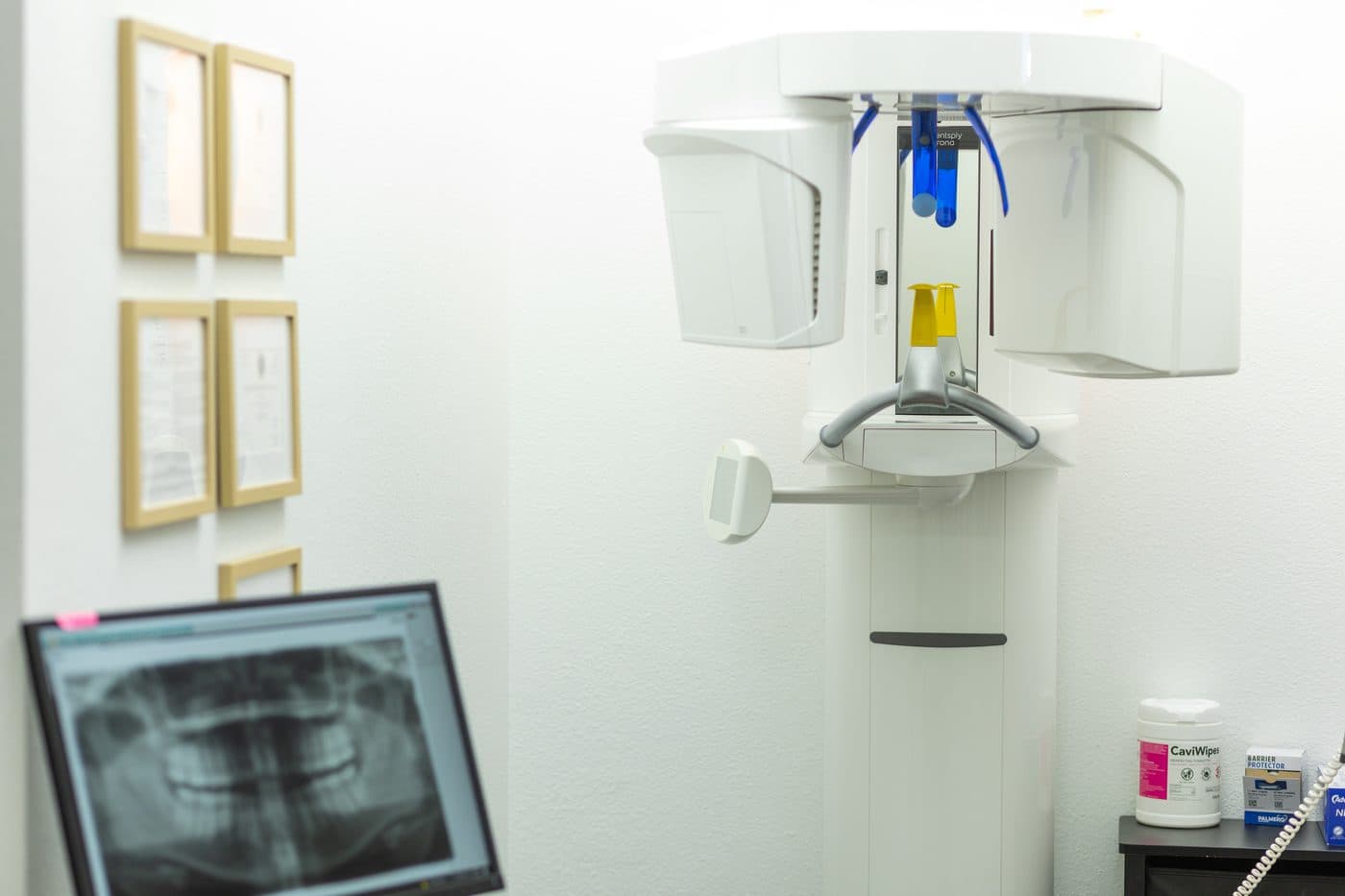
So before any implant, we take a scan on our i-CAT 3D cone beam machine. You sit still for a few moments while it turns around your head, and nothing touches your teeth. We use the 3D image to choose the length, width and angle of each implant and to see whether a graft is needed. You look at the scan with us, so the plan isn't something you have to take on faith.
The scan is also why you can get a real answer at the consultation. Instead of a range and a maybe, you leave knowing whether you're a candidate, what has to happen first, and what the whole thing costs.
The steps, from consultation to final tooth
Every case has its own timeline, but most follow the same order. Each step gets its own line on your written estimate.
You won't be left with an obvious gap while you heal. Depending on where the implant is, there are temporary options, and we'll plan which one fits before surgery day.
- Consultation and scan. An exam, the 3D scan, and a conversation about what you want. You leave with an itemized plan.
- Getting ready. Any extractions, gum treatment or bone grafting happens first. Many people skip this step entirely.
- Placing the implant. The area is numbed, and nitrous oxide or oral conscious sedation is available. The implant is set into the bone and the gum is closed around it. For a single implant, the visit is usually shorter than people expect.
- Healing. Over the next few months the bone grows tight against the implant. This is called osseointegration, and it's what makes an implant solid enough to chew on. It can take longer in the upper jaw or after a graft.
- The connector. A small post called an abutment is attached to the implant. Sometimes it goes on at surgery, sometimes at a short second visit.
- The final tooth. We take a digital scan instead of a putty impression, a lab makes your crown, bridge or denture, and we fit it and adjust your bite until it feels right.
How much do dental implants cost in Mesquite?
We don't list one implant price online, because two people missing the same tooth can need very different work. What you get instead: after the exam and 3D scan, a written estimate that itemizes every part, so you can see exactly where the money goes and nothing gets added later without a conversation.
Compared with a bridge or a denture, implants cost more up front. Over the long run the gap often narrows. A well cared for implant can last for decades, while bridges and dentures usually need replacing or relining along the way. We lay the options side by side so you compare the full picture, not just this year's bill.
What moves the number:
- How many implants you need, and where they go.
- What has to happen first: extractions, gum treatment, or a bone graft.
- The restoration on top: a single crown, a bridge, or a full denture, and what it's made from.
- The parts: the implant itself and the abutment that connects it to the tooth.
- Sedation, if you choose nitrous oxide or oral conscious sedation.
Does insurance cover dental implants?
Sometimes, partly. Dental plans vary more on implants than on almost anything else. Some cover the implant itself, some cover only the crown or denture on top, and some leave implants out entirely but still pay toward the extraction, the graft or the exam. Waiting periods and your plan's yearly maximum also cap what it pays in a single year.
We're in network with Aetna, Blue Cross Blue Shield, Cigna, Delta Dental, Dentamax, Guardian, Humana, MetLife, United Concordia and UnitedHealthcare, and we work with other plans too. Before treatment we check your benefits and, when it helps, ask your plan for a pre-treatment estimate. Then we write down what the plan is expected to pay and what's left for you.
One practical point: because healing takes months anyway, a case that starts late in the year often finishes early in the next one. That can let you use two yearly maximums instead of one. Ask us to map it out.
Ways to make implants affordable
If insurance doesn't cover much, or you don't have it, there are still practical ways to get there:
- Sunshine Membership. For patients without insurance: a $110 one-time fee covers 2 checkups with x-rays and takes 30 to 40% off dental treatment, with no monthly fees. Ask how it applies to your implant plan.
- Sunbit. Monthly payments on larger treatment. You can apply in the office in a few minutes.
- Cherry. Another way to split the cost into monthly payments.
- Phasing. Missing several teeth? We can start with the ones that matter most for chewing and add the rest later, on a plan you can see in writing.
- An honest comparison. If a bridge or a partial denture fits your budget and your mouth better right now, we'll say so, and show how you could move to implants later.
Recovery: the first day, the first week, and the months after
For a single implant, recovery is often easier than people expect, closer to having a tooth pulled than to major surgery. You'll go home with written instructions. Here's the short version.
The first day: bite gently on gauze if there's oozing, rest with your head raised, and hold a cold pack on your cheek on and off. Don't spit, don't use a straw, and don't smoke, so the blood clot can settle. Take pain medicine the way we've directed.
The first week: swelling usually peaks around the second or third day, then fades. Brush your other teeth as normal and go gently near the implant. Warm salt-water rinses after meals keep the area clean; skip alcohol-based mouthwash for now. Stick to soft foods like eggs, yogurt, pasta, mashed potatoes, fish and soup that isn't too hot, and chew on the other side.
The months after: you'll feel normal long before the implant is fully fused, so keep hard and crunchy food away from the site until we say it's ready. Call us if pain gets worse after the third day instead of better, if you run a fever, or if bleeding won't stop with firm pressure. Go to the ER for swelling that spreads into your face or neck, or any trouble breathing or swallowing.
Keeping implants healthy, and what to do if one is failing
An implant can't get a cavity, but the gum and bone around it can get infected. That's called peri-implantitis, and it's the most common reason implants fail years later. Brush twice a day, clean around the implant with floss, a water flosser or small brushes, and keep your regular checkups so early bleeding or bone loss shows up on x-rays before it's serious. If you grind your teeth, a night guard protects the implant and the crown.
Other things that cause trouble: an implant that never fully bonds in the first months, an injury, heavy grinding, smoking, and health conditions such as uncontrolled diabetes.
Signs to watch for: pain after you've healed, bleeding or pus around the implant, gums pulling back, trouble chewing, or a tooth that feels loose. A loose crown on a solid implant is a simple fix. A loose implant isn't, so don't wait to find out which one you have.
Come in even if the implant was placed somewhere else. We'll examine it and take a 3D scan. Sometimes the fix is straightforward: treating the infection, replacing a worn crown or screw, or adjusting your bite. Sometimes the implant has to come out, the site heals, possibly with a graft, and a new implant is considered later. Either way, you'll hear plainly which situation you're in and what each option costs.
Cost
What it costs.
Published prices only. Anything beyond the visit is quoted in writing first.
First visit
$80New patient exam
A dental exam with x-rays, plus time with the dentist to talk through what you want before anything is done.Treatment
In writing
A written estimate before treatment. You see the cost, and what your insurance is expected to cover, before anything starts.Insurance
In network
In network with many major dental plans, and we check your benefits before your visit. We also help adult Medicaid patients use the services their plan covers.Insurance we takeNo insurance
$110one-time fee
The Sunshine Membership: 2 dental checkups with x-rays, unlimited limited exams for pain and 30 to 40% off treatment, with no monthly fees.Membership details
Sunbit and Cherry offer monthly payments on larger treatment.
Questions
About dental implants
Am I too old for dental implants?
Do I need to see a specialist?
Does getting an implant hurt?
How long does the whole process take?
How long do dental implants last?
Implant or bridge: which is better?
I was told I don't have enough bone. Is that the end of it?
Can you look at an implant another office placed?
Will I have teeth while the implant heals?
Does insurance cover implants?
Related
Often asked about together
- Dentures and partialsFull and partial dentures, plus implant dentures that don't slip.
- Crowns, fillings and bridgesTooth-colored fillings, porcelain and metal-free crowns, and bridges.
- Tooth extractionsSimple and surgical extractions when a tooth can't be saved.
- Patient guideDentures or dental implants: how to chooseCost factors, bone loss, comfort and upkeep, side by side.
- Patient guideIs dental sedation right for you?Nitrous oxide or oral conscious sedation: how they feel, who they suit, and safety.
Next step
Ask about implants.
You'll see what we see, hear your options in plain language, and get the cost in writing before anything starts.
925 N Bryan-Belt Line Rd, Suite 106, Mesquite. Mon, Wed, Thu 9am to 3pm. Tue 10am to 3pm. Fri to Sun closed.