Crowns, fillings and bridges
What we do
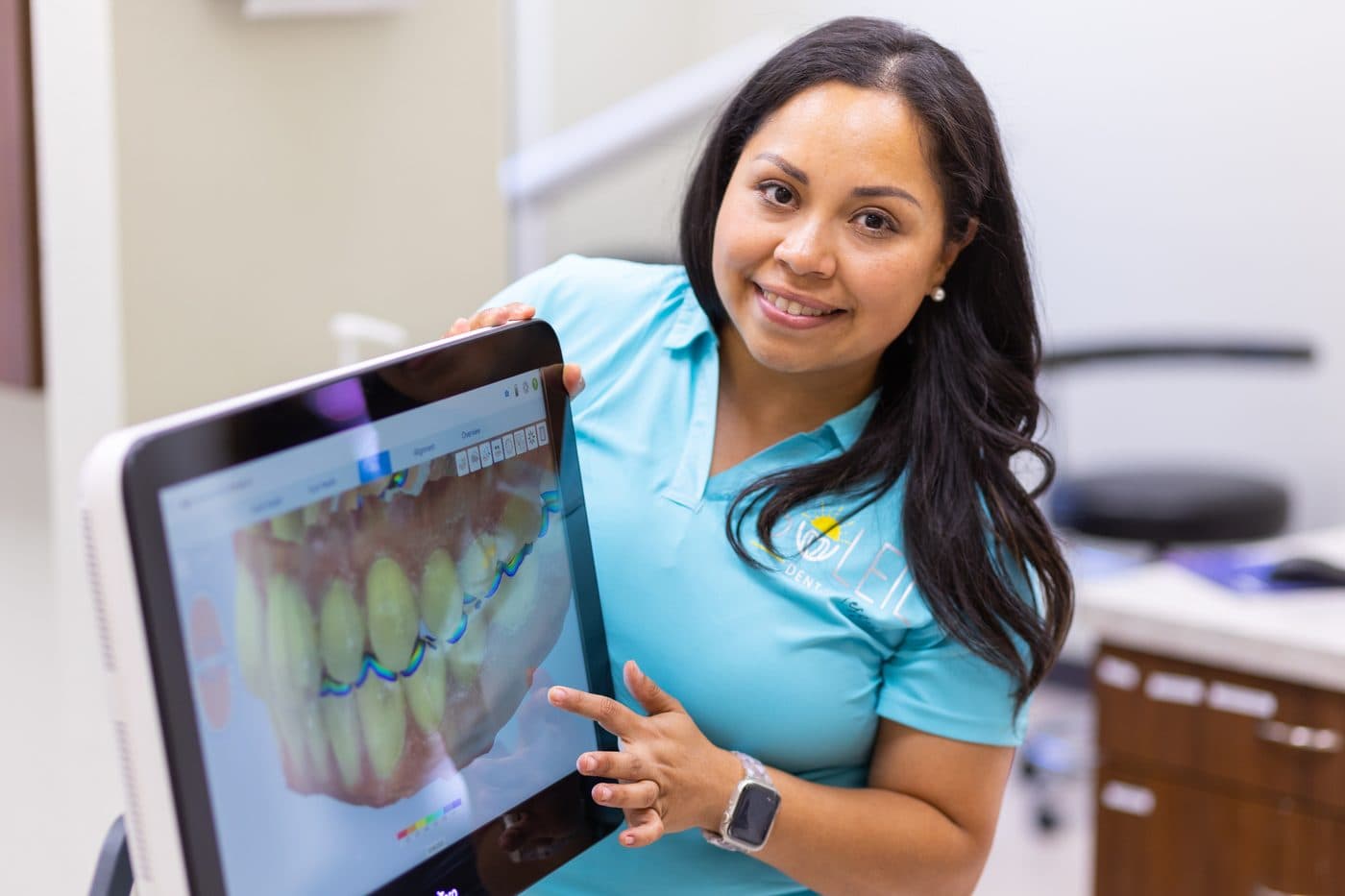
A filling repairs a cavity. A crown covers and protects a tooth that's cracked, badly worn, or too damaged for a filling. A bridge replaces a missing tooth by anchoring to the teeth on either side. All three are made to match your natural teeth, and all three start the same way at our Mesquite office: you see the problem on screen, and you get the cost in writing before we touch the tooth.
Filling, crown or bridge: how we decide
It comes down to how much healthy tooth is left and how much work that tooth has to do. Before we recommend anything, you'll see the tooth on screen from our intraoral camera and digital x-rays, so the call makes sense to you too.
- A small or medium cavity with strong walls around it: a filling.
- A large cavity, a big old filling that's breaking down, a crack, or heavy wear: a crown.
- A back tooth after a root canal: almost always a crown.
- A missing tooth with teeth on both sides: a bridge, or an implant if you'd rather not crown the neighbors.
Tooth-colored fillings
We fill cavities with composite, a tooth-colored material shaded to blend in. The tooth is numbed, the decay is removed, and the composite is bonded to the tooth in thin layers and hardened with a light. Then we shape it to your bite and polish it smooth. Most fillings take one visit, and you can eat once the numbness wears off.
Because composite bonds to the tooth, it often takes less drilling than an old metal filling needed. And small cavities stay small fillings, which is the best argument there is for regular checkups.
After a filling, your bite should feel normal once the numbness fades. If the tooth feels high when you bite, or stays sensitive to cold for more than a couple of weeks, call us. A quick adjustment usually fixes it.
Replacing old silver fillings
Plenty of adults still have silver fillings from decades ago. If one is intact and the tooth is healthy, there's usually no reason to rush it out. We suggest replacing an old filling when it's cracked, leaking, has decay underneath, or when you'd like a more natural look and understand the trade-off.
Large old fillings are also one of the most common reasons teeth crack. A tooth that's more filling than tooth may need a crown rather than another, bigger filling. We'll show you the camera image and explain which makes sense.
Dental crowns
A crown is a cap that covers the whole visible part of a tooth and restores its shape and strength. Ours are usually porcelain, custom shaded to match your other teeth, and metal-free crowns are available when appearance matters most, like on front teeth.
It takes two visits. At the first, we numb the tooth, shape it, and take a digital scan instead of a tray of putty, which is much easier if you have a strong gag reflex. You leave with a temporary crown. A dental lab makes the final one, and at the second visit we check the fit, the color and your bite before cementing it in place.
With good care, a crown often lasts ten to fifteen years or more. Grinding, chewing ice, sticky candy and skipped cleanings shorten that.
Dental bridges
A bridge fills the gap left by a missing tooth. Crowns go on the teeth on each side, and a replacement tooth is attached between them as one piece. It's fixed in place, so there's nothing to take out at night.
A bridge makes the most sense when the neighboring teeth already have large fillings or need crowns anyway. If they're healthy and untouched, an implant usually protects them better. When several teeth in a row are missing, an implant-supported bridge can hold them on just two implants. We'll price the choices side by side.
Clean under a bridge every day with a floss threader or a water flosser. Decay at the edges of the anchor teeth is one of the most common reasons bridges fail.
Cavities and cracked teeth after 50
Teeth don't stop needing attention as we get older; the problems just change. Gums recede and expose the root surface, which is softer than enamel and decays faster. Many everyday medications for blood pressure, allergies, mood and sleep cause dry mouth, and less saliva means more cavities. And decades of chewing leave fine cracks, especially in teeth with big fillings.
What helps: fluoride toothpaste, a stronger fluoride if we recommend it, sipping water through the day, and checkups often enough to catch root cavities while they're small. If a tooth hurts sharply when you bite down or let go, tell us. That's a classic sign of a crack, and catching it early can save the tooth.
How much do crowns and fillings cost, and does insurance help?
Cost depends on the size and location of the filling, the crown material, and whether the tooth needs a buildup or other work first. You get a written estimate before anything starts.
Most plans cover fillings as basic care, often around 70 to 80 percent after the deductible. Crowns and bridges are usually major care, often around half, and plans may limit how often they'll replace a crown, commonly once every five years or so. Some plans won't pay for a bridge to replace a tooth that was missing before your coverage started. We check for all of that up front.
We're in network with Aetna, Blue Cross Blue Shield, Cigna, Delta Dental, MetLife and several other plans. Without insurance, the Sunshine Membership is a $110 one-time fee with 30 to 40% off dental treatment and no monthly fees, and Sunbit and Cherry offer monthly payments.
Cost
What it costs.
Published prices only. Anything beyond the visit is quoted in writing first.
First visit
$80New patient exam
A dental exam with x-rays, plus time with the dentist to talk through what you want before anything is done.Treatment
In writing
A written estimate before treatment. You see the cost, and what your insurance is expected to cover, before anything starts.Insurance
In network
In network with many major dental plans, and we check your benefits before your visit. We also help adult Medicaid patients use the services their plan covers.Insurance we takeNo insurance
$110one-time fee
The Sunshine Membership: 2 dental checkups with x-rays, unlimited limited exams for pain and 30 to 40% off treatment, with no monthly fees.Membership details
Sunbit and Cherry offer monthly payments on larger treatment.
Questions
About crowns, fillings and bridges
Crown or filling: how do you decide?
Can you replace my old silver fillings?
How long does a filling last?
Does getting a crown hurt?
Can I eat with a temporary crown?
Do you make same-day crowns?
Is a porcelain crown strong enough for a back tooth?
What if my tooth is cracked?
Does insurance cover crowns?
Related
Often asked about together
- Root canalsSaving an infected or badly damaged tooth, including molars.
- Dental implantsSingle implants, implant bridges, implant dentures, 3D planning and implant repair.
- Cosmetic dentistryVeneers, metal-free crowns, bonding and in-office whitening.
- Patient guideWhat a root canal actually feels likeThe numbing, the procedure, the days after, and why the reputation is out of date.
- Patient guideHow dental insurance works, in plain EnglishNetworks, PPOs, maximums, deductibles, waiting periods, and the path without insurance.
- Patient guideKnocked out or broken tooth: what to do right nowFirst aid for the first hour, when to call us, and when to go to the ER.
Next step
Questions about crowns, fillings and bridges? Start with an exam.
You'll see what we see, hear your options in plain language, and get the cost in writing before anything starts.
925 N Bryan-Belt Line Rd, Suite 106, Mesquite. Mon, Wed, Thu 9am to 3pm. Tue 10am to 3pm. Fri to Sun closed.