Wisdom teeth removal
What we do
Wisdom teeth are the third molars at the very back of your mouth. Many mouths don't have room for them, so they come in crooked, get stuck under the gum, or trap food and bacteria. Removing the ones that cause trouble prevents pain, infection and damage to the teeth in front. It's for teens and adults alike, and it's never too late if a wisdom tooth has started acting up. At our Mesquite office, many wisdom teeth are handled right here. If yours need a specialist, we'll tell you before anything starts.
Why wisdom teeth cause problems
Wisdom teeth arrive last, usually somewhere between the late teens and mid twenties, and by then there often isn't room for them. When they can't come in straight, trouble follows:
- Impaction: the tooth is stuck partly or fully under the gum or bone
- Gum infection: a partly erupted tooth leaves a flap of gum that traps food and bacteria, bringing pain, swelling and a bad taste
- Decay: they're so far back that brushing and flossing barely reach, and the molar in front can decay too
- Pressure and damage: a tooth growing at an angle can push against the molar in front and harm its root
- Cysts: occasionally a fluid-filled sac forms around an impacted tooth and damages the jawbone
Do wisdom teeth always need to come out?
No. Wisdom teeth that come in fully, sit upright, meet the tooth above or below, and can be kept clean may never need removal. We keep an eye on them on your x-rays at regular visits.
We recommend removal when a tooth is causing a problem now, or when the x-rays show it's very likely to. If you're in pain, that comes first. If you're not, you'll get a clear explanation of which teeth are a problem, which could become one, and which can stay, so you can decide on your own timeline.
When removal is needed, the late teens and early twenties are often the easiest time, because the roots aren't fully formed and healing tends to be quicker. But the right time is really when a tooth is causing a problem or clearly headed for one, whatever your age.
Am I too old to have my wisdom teeth out?
You're not. Plenty of adults in their thirties, forties and beyond have wisdom teeth removed, often because a tooth that sat quietly for years has started hurting or getting infected.
Age does change a few things. Roots grow longer and the bone around them gets denser, so the extraction can take more care, and healing often takes a little longer. That's a reason to deal with a problem tooth sooner rather than later, not a reason to live with the pain.
What wisdom tooth removal is like
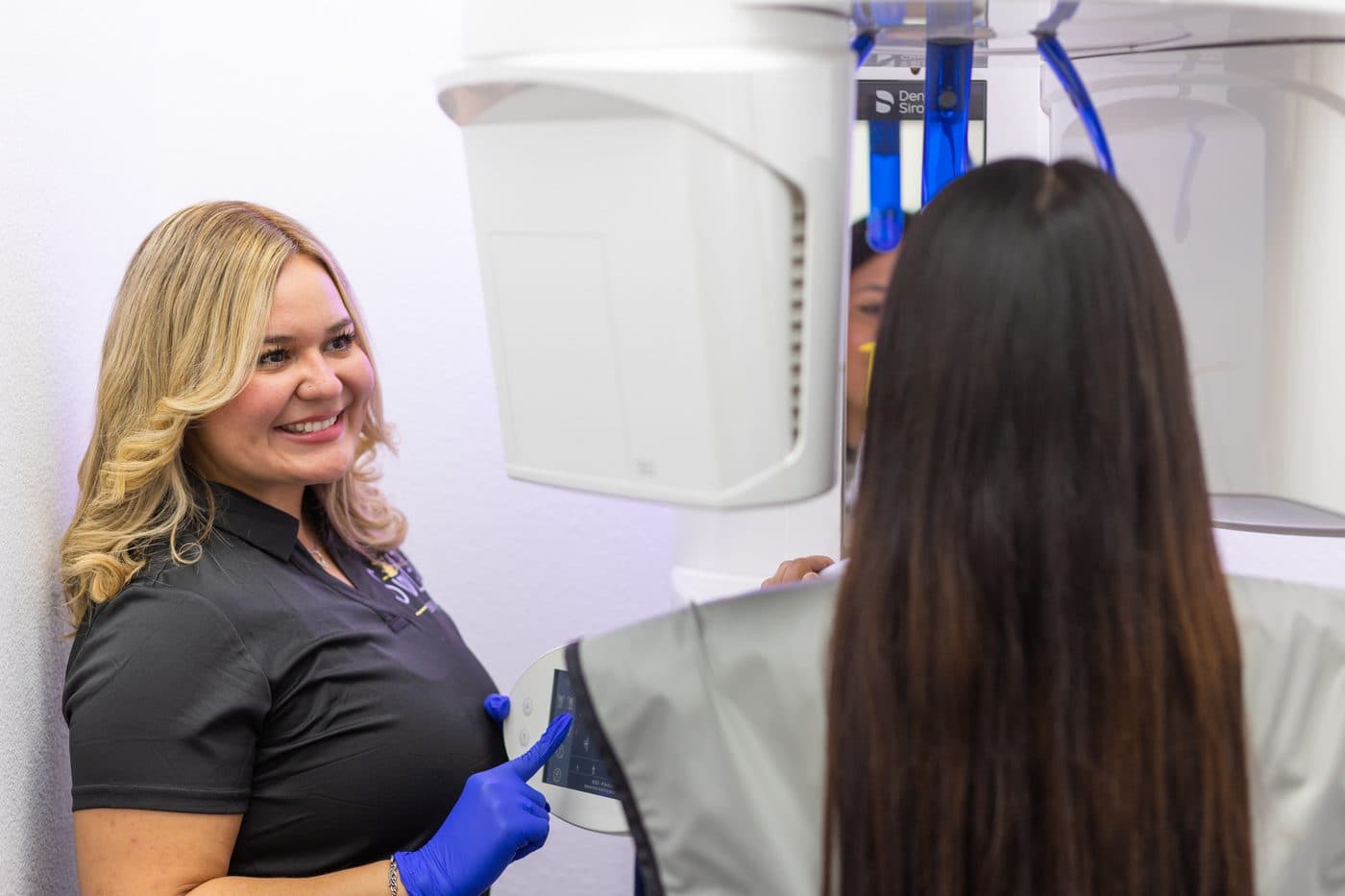
It starts with an exam and x-rays so we can see the angle of each tooth, how far it has come in, and how close the roots sit to the nerve in the lower jaw. When a root looks close to that nerve, our 3D cone beam scan gives a much clearer view. That tells us whether each tooth is a simple or a surgical extraction.
A wisdom tooth that has fully come in can often come out like any other tooth. An impacted tooth needs a surgical extraction: a small opening in the gum, sometimes removing a little bone, and taking the tooth out in sections. Stitches may be placed.
The area is fully numbed either way. With nitrous oxide you stay relaxed and can usually drive yourself home. Oral conscious sedation is a pill that leaves you drowsy, and you'll need someone to drive you and stay with you afterward. We don't offer IV sedation or general anesthesia. If your case calls for either, we'll tell you up front and help you find the right specialist.
Wisdom tooth recovery, day by day
Everyone heals at their own pace, and impacted teeth take longer than simple ones. You'll get written instructions to take home. This is a typical path:
- Day 1: Some bleeding and oozing is normal. Bite on gauze, rest with your head raised, and use cold packs on your cheeks, 20 minutes on and 20 off. Eat cool, soft foods like yogurt, applesauce or a smoothie, with a spoon, never a straw. No spitting, rinsing or smoking.
- Days 2 and 3: Swelling and jaw stiffness usually peak now, so don't worry if you look puffier on day two than on day one. Keep up the pain medicine on schedule. Start gentle warm salt-water rinses after meals, letting the water fall out of your mouth instead of spitting.
- Days 4 and 5: Swelling starts going down and you can open wider. Move on to soft foods like eggs, pasta, mashed potatoes and soup. If your jaw is stiff, warm compresses help more than cold ones now.
- Days 6 and 7: Most people feel close to normal and are back at work or school. Keep chewing away from the sockets.
- Week 2 and beyond: Stitches dissolve or come out, the gum closes, and you can slowly go back to crunchy foods. The sockets keep filling in underneath for weeks.
Dry socket: how to avoid it and what to do
After a tooth comes out, a blood clot fills the socket and protects the bone while it heals. If the clot comes loose or dissolves too early, the bone is left exposed. That's a dry socket. It's most common after lower wisdom teeth and usually shows up two to four days after the extraction.
The signs: pain that gets worse instead of better after a few days, often throbbing and spreading toward your ear, a bad taste or smell, and a socket that looks empty. It hurts, but it's very treatable. Call us. The usual fix is to gently clean the socket and place a soothing medicated dressing, and relief often comes quickly.
To lower your risk: no straws, spitting or forceful rinsing for the first few days, no smoking or vaping for at least 72 hours (longer is better), and follow the rinse instructions exactly.
Also call for a fever, swelling that keeps growing after day three, pus, or numbness that doesn't wear off. Go to the ER for swelling that spreads into your face or neck, or any trouble breathing or swallowing.
How much does wisdom tooth removal cost?
It depends on how many teeth come out, whether each one is simple or impacted, and whether you choose sedation. After the exam and x-rays, you get a written estimate that breaks it down tooth by tooth.
Most dental plans cover at least part of wisdom tooth removal, subject to your deductible and yearly maximum, and we help adult Medicaid patients use the services their plan covers. No insurance? The Sunshine Membership is a $110 one-time fee that takes 30 to 40% off dental treatment, with no monthly fees, and Sunbit and Cherry offer monthly payments.
For students, scheduling around a school break or a long weekend makes the first few days much easier.
Cost
What it costs.
Published prices only. Anything beyond the visit is quoted in writing first.
First visit
$80New patient exam
A dental exam with x-rays, plus time with the dentist to talk through what you want before anything is done.Treatment
In writing
A written estimate before treatment. You see the cost, and what your insurance is expected to cover, before anything starts.Insurance
In network
In network with many major dental plans, and we check your benefits before your visit. We also help adult Medicaid patients use the services their plan covers.Insurance we takeNo insurance
$110one-time fee
The Sunshine Membership: 2 dental checkups with x-rays, unlimited limited exams for pain and 30 to 40% off treatment, with no monthly fees.Membership details
Sunbit and Cherry offer monthly payments on larger treatment.
Questions
About wisdom teeth
Will I be asleep?
Do all four have to come out at once?
How long does recovery take?
What can I eat after wisdom teeth removal?
When can I go back to work or school?
Should wisdom teeth come out if they don't hurt?
Will my face swell?
Can I smoke or vape after the extraction?
Does insurance cover wisdom teeth removal?
What if my wisdom tooth hurts right now?
Related
Often asked about together
- Tooth extractionsSimple and surgical extractions when a tooth can't be saved.
- Sedation and anxiety-free careNitrous oxide and oral conscious sedation for nervous patients and long visits.
- Emergency dentistToothaches, broken teeth, swelling and lost crowns. $40 emergency exam.
- Patient guideIs dental sedation right for you?Nitrous oxide or oral conscious sedation: how they feel, who they suit, and safety.
Next step
Ask about wisdom teeth.
You'll see what we see, hear your options in plain language, and get the cost in writing before anything starts.
925 N Bryan-Belt Line Rd, Suite 106, Mesquite. Mon, Wed, Thu 9am to 3pm. Tue 10am to 3pm. Fri to Sun closed.