Root canal treatment
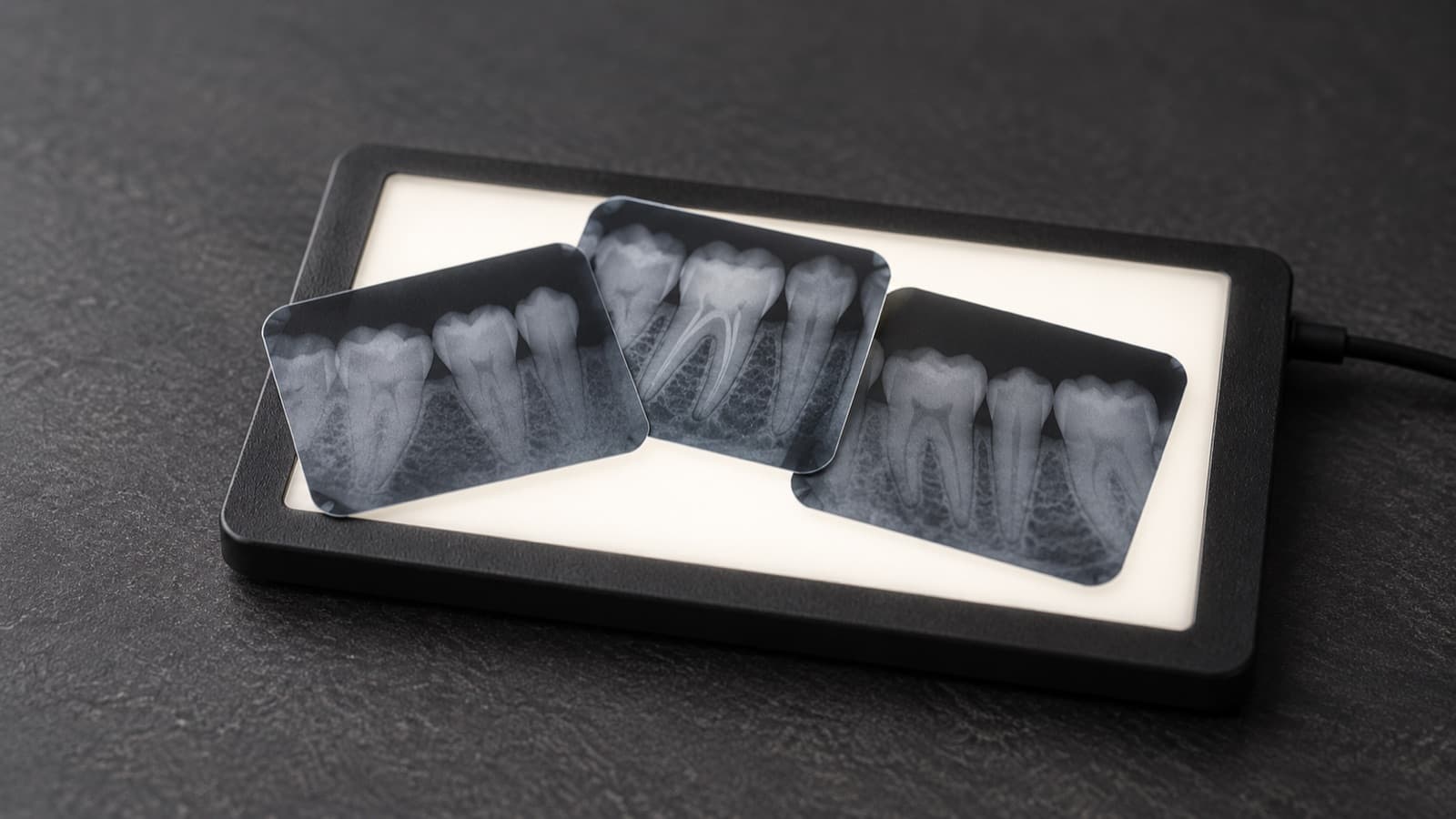
What we do
A root canal saves a tooth whose pulp, the soft tissue inside that holds the nerve, is infected or badly inflamed. It usually starts with deep decay, a crack, or an old injury. We remove the damaged pulp, clean and seal the inside of the tooth, and then protect it, usually with a crown. If a tooth can be saved, this is how. At our Mesquite office, both doctors do root canals, and many molar root canals are done here instead of being referred out.
Signs you might need a root canal
The problem is inside the tooth, so the signs aren't always obvious. The common ones:
- A toothache that throbs, lingers, or wakes you up at night
- Sensitivity to hot or cold that hangs on after the drink is gone
- Pain when you bite down or tap on the tooth
- A pimple-like bump on the gum that comes and goes, sometimes with a bad taste
- Swelling in the gum or face near one tooth
- A tooth that has turned gray or dark after an injury
- Nothing at all: sometimes an infection shows up first on an x-ray at a routine checkup
How we know it's the nerve
We don't recommend a root canal on a hunch. We take digital x-rays of the tooth and the bone around its root, and we may check how the tooth responds to cold and to gentle tapping. Together those tell us whether the pulp is irritated but might settle down, or damaged past the point of healing.
You'll see the x-ray on the screen with us. If the answer is a root canal, you'll know why. If the tooth might calm down with something simpler, like a filling, we'll tell you that too.
Older teeth need a careful look. The canals inside tend to narrow over the years, and big old fillings or crowns can hide what's happening underneath. That's one more reason the images come first.
What the procedure is like
We numb the tooth thoroughly and make sure it's numb before starting. A small rubber sheet isolates the tooth to keep it clean and dry. The dentist makes a small opening in the top, removes the infected pulp, cleans and shapes each canal, and fills them with a rubber-like material that seals them. The opening is closed with a filling. Many root canals are finished in one visit; some take two.
For most people, it feels a lot like getting a filling, just longer. If you're anxious, nitrous oxide or oral conscious sedation is available.
Molars are the hardest teeth to treat. They sit far back and have three or more canals, some narrow and curved. Both of our dentists do root canals, including on molars, so many can be done right here. If a tooth is unusually complex, we'll tell you before starting and refer you to a specialist rather than guess.
After the root canal
Expect the tooth and gum to feel tender for a few days, especially when you bite. Over-the-counter pain relievers usually handle it. If you were given antibiotics for swelling, finish them.
Until the permanent crown is on, chew on the other side. A tooth that has had a root canal is drier and more brittle, and a back tooth can crack under a hard bite before it's protected. Keep brushing and flossing around it as usual. The tooth can't feel hot or cold anymore, but the gum and bone around it still need checkups.
Call us if swelling grows after a couple of days, if pain increases instead of fading, or if the temporary filling comes out. Go to the ER for swelling that spreads into your face or neck, or any trouble breathing or swallowing.
Do you need a crown after a root canal?
Back teeth almost always do. Molars and premolars take the most chewing force, and without a crown a root-canaled back tooth is at real risk of splitting, which can mean losing the tooth you just saved. Front teeth that are mostly intact can sometimes get by with a filling.
The crown is usually porcelain, custom shaded, and made from a digital scan instead of putty. Sometimes a small post or core buildup goes in first to give the crown something solid to hold. All of it goes on the same written estimate as the root canal, so the total is clear from day one.
Does insurance cover a root canal?
Usually, at least in part. Many plans cover root canals as basic care, often around 70 to 80 percent after the deductible, while some class them as major care at around half. The crown that follows is usually major care. Your yearly maximum caps the total, so a root canal and a crown in the same year can use up much of it.
We check your plan before treatment and give you the numbers in writing. No insurance? The Sunshine Membership is a $110 one-time fee that takes 30 to 40% off dental treatment, with no monthly fees, and Sunbit and Cherry offer monthly payments.
If you're hurting and aren't a patient yet, start with the $40 emergency exam with limited x-rays. It's the quickest way to find out what's going on and what it will cost to fix.
Root canal or extraction?
Pulling a tooth can look cheaper on the day. Over time it often isn't. A missing back tooth lets its neighbors drift and tip, and the bone underneath shrinks. Replacing it well usually means an implant or a bridge, which costs more than saving the tooth in the first place.
Not every tooth is worth saving, though. A tooth cracked down into the root, or with too little left to hold a crown, may do better as an extraction and a replacement. You'll get both paths with costs side by side, and the decision is yours.
Cost
What it costs.
Published prices only. Anything beyond the visit is quoted in writing first.
First visit
$80New patient exam
A dental exam with x-rays, plus time with the dentist to talk through what you want before anything is done.Treatment
In writing
A written estimate before treatment. You see the cost, and what your insurance is expected to cover, before anything starts.Insurance
In network
In network with many major dental plans, and we check your benefits before your visit. We also help adult Medicaid patients use the services their plan covers.Insurance we takeNo insurance
$110one-time fee
The Sunshine Membership: 2 dental checkups with x-rays, unlimited limited exams for pain and 30 to 40% off treatment, with no monthly fees.Membership details
Sunbit and Cherry offer monthly payments on larger treatment.
Questions
About root canals
Does a root canal hurt?
Can antibiotics fix it instead?
Do I need a crown after a root canal?
How soon should I get it done?
How many visits does it take?
How long does a root-canaled tooth last?
Can a root canal fail?
Can I drive myself home?
Is it true root canals make you sick?
Does insurance cover a root canal?
Related
Often asked about together
- Crowns, fillings and bridgesTooth-colored fillings, porcelain and metal-free crowns, and bridges.
- Emergency dentistToothaches, broken teeth, swelling and lost crowns. $40 emergency exam.
- Tooth extractionsSimple and surgical extractions when a tooth can't be saved.
- Patient guideWhat a root canal actually feels likeThe numbing, the procedure, the days after, and why the reputation is out of date.
- Patient guideKnocked out or broken tooth: what to do right nowFirst aid for the first hour, when to call us, and when to go to the ER.
Next step
Book a toothache visit.
You'll see what we see, hear your options in plain language, and get the cost in writing before anything starts.
925 N Bryan-Belt Line Rd, Suite 106, Mesquite. Mon, Wed, Thu 9am to 3pm. Tue 10am to 3pm. Fri to Sun closed.