Braces and orthodontics
What we do
Orthodontics moves teeth into better positions for a healthier bite and a straighter smile. We offer traditional braces using the Straight-Wire technique and Invisalign clear aligners, for children and adults at our Mesquite office. Because we do both, the question we help you answer isn't whether to straighten, but which tool fits your teeth, your age and your routine.
Braces or Invisalign: the short answer
Both move teeth well. The differences are in daily life:
- Braces are fixed to your teeth and work around the clock. Nothing to remember, nothing to lose. They handle complex movements and are usually the better fit for kids.
- Invisalign trays are clear and removable. You take them out to eat and brush, so there are no food rules. They only work when you wear them, about 20 to 22 hours a day.
- Braces need adjustment visits while your teeth move. Aligner check-ins are usually shorter.
- Brushing and flossing take more effort around brackets. With aligners, you clean your teeth the normal way.
What problems do braces fix?
Orthodontics is about how teeth fit together as much as how they look. The most common reasons people come in:
- Crowded, overlapping or twisted teeth that are hard to clean
- Gaps between teeth
- An overbite, where the upper front teeth sit far over the lower ones
- An underbite, where the lower teeth sit in front of the upper ones
- A crossbite, where some upper teeth close inside the lower ones
- An open bite, where the front teeth don't meet
What are Straight-Wire braces?
Traditional braces use small brackets bonded to each tooth, joined by a thin archwire held in place with tiny elastics. The wire applies steady, gentle pressure, and over time the teeth follow it.
Straight-Wire is a well-established system where each bracket is built for the specific tooth it sits on. The angle and position are designed into the bracket itself, so a single wire can guide every tooth toward its planned place. That gives the dentist precise control and keeps adjustments efficient. Both of our dentists offer braces.
When are braces the better choice?
Braces are usually the right call for younger kids, who aren't ready to be responsible for trays that come in and out. They also shine for bigger work: teeth that need large rotations, significant bite corrections, or teeth that need to move up or down a lot. And they suit adults who are honest that aligners would end up in a drawer. Braces can't be forgotten.
When is Invisalign the better choice?
Invisalign fits older teens and adults with mild to moderate crowding, gaps or bite problems who want treatment that's hard to notice. It's popular with people who speak for a living, people who'd rather not change what they eat, and anyone who wants brushing and flossing to stay simple. If you're leaning toward aligners, we'll tell you plainly whether your case is a good match.
When should a child be checked for braces?
The American Association of Orthodontists suggests a first orthodontic check by around age 7, when enough adult teeth are in to spot bite problems early. That doesn't mean braces at 7. For most kids it just means watching.
We keep an eye on how your child's teeth and jaws are developing at regular checkups, and we'll tell you when an orthodontic evaluation makes sense. Signs worth mentioning: crowded or overlapping teeth, baby teeth lost very early or very late, trouble chewing, mouth breathing, or a bite where the top and bottom teeth don't meet the way they should.
Can adults get braces?
Yes. Teeth can move at any age as long as the gums and bone around them are healthy. Many adults straighten teeth that shifted over the years, or fix a bite that's wearing teeth down. We check your gums and take x-rays first, and treat any gum disease before we move anything. Many adults choose Invisalign; braces are an option too, and sometimes the better one.
What treatment looks like, start to finish
Whichever option you choose, the path is similar:
- Exam and x-rays to check teeth, gums, jaws and bite.
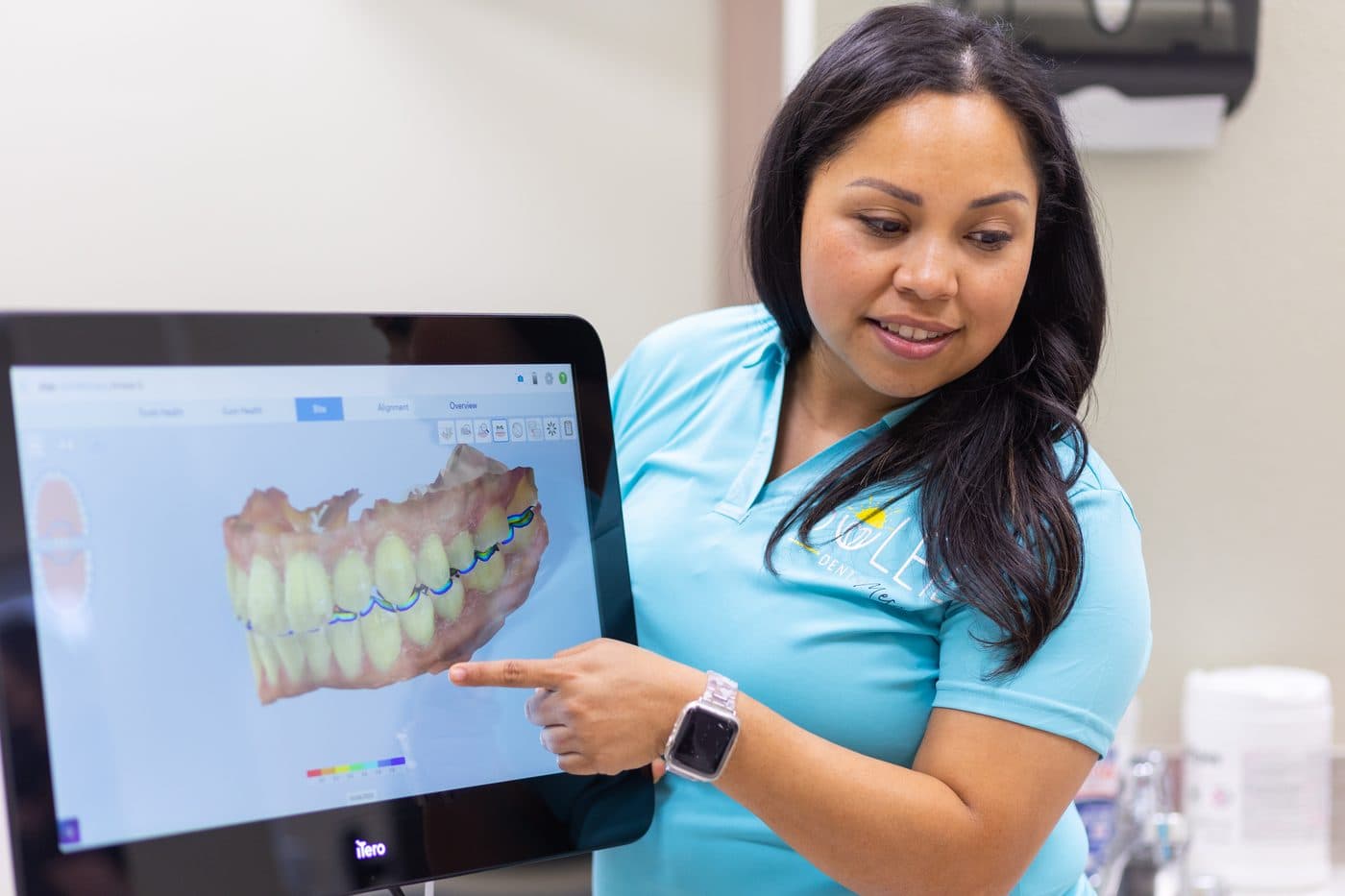
- A digital scan or records so we can plan the movement.
- A written plan with the expected timeline and the full cost, including what insurance is expected to cover.
- Placing the braces, or fitting your first aligners, with clear instructions for home.
- Regular visits to adjust braces or check aligner progress.
- Removing the braces or finishing the last tray, then fitting a retainer to hold the result.
How long do braces take?
It depends on how far the teeth need to move. For most people, treatment with braces takes somewhere between one and three years, and simpler cases can be shorter. Invisalign cases often run about 12 to 18 months. Your written plan includes an estimated timeline for your case, and keeping appointments on schedule is the best way to stay on it.
Living with braces
Expect some soreness for a few days after the braces go on and after adjustments. Soft foods and an over-the-counter pain reliever help. Wax covers any bracket that rubs your cheek.
Skip foods that are sticky or very hard, like caramel, taffy, hard candy, ice and popcorn, because they can bend wires and pop brackets loose. Brush after meals and floss daily with a floss threader or interdental brush; we'll show you how. Keep your regular cleanings during treatment, since plaque around brackets can leave white spots on teeth.
What do braces cost, and does insurance help?
The cost depends on the complexity of the case and how long treatment runs. Many dental plans include an orthodontic benefit, often with a lifetime maximum and sometimes an age limit, that can cover part of braces or Invisalign. We check your plan first and put the numbers in writing before you commit. Sunbit and Cherry offer monthly payments for the rest.
Retainers: keeping the result
Once teeth are straight, they tend to drift back. A retainer holds them. Most people wear one full time at first, then only at night. Wear it as directed and your investment stays put.
Cost
What it costs.
Published prices only. Anything beyond the visit is quoted in writing first.
First visit
$80New patient exam
A dental exam with x-rays, plus time with the dentist to talk through what you want before anything is done.Treatment
In writing
A written estimate before treatment. You see the cost, and what your insurance is expected to cover, before anything starts.Insurance
In network
In network with many major dental plans, and we check your benefits before your visit. We also help adult Medicaid patients use the services their plan covers.Insurance we takeNo insurance
$110one-time fee
The Sunshine Membership: 2 dental checkups with x-rays, unlimited limited exams for pain and 30 to 40% off treatment, with no monthly fees.Membership details
Sunbit and Cherry offer monthly payments on larger treatment.
Questions
About braces (Straight-Wire)
What age should kids be evaluated for braces?
Can adults get braces?
Are braces or Invisalign faster?
Do braces hurt?
What can't I eat with braces?
Can I play sports or an instrument with braces?
Does insurance cover braces?
Do I have to wear a retainer after braces?
Can my child's appointments be in Spanish?
Related
Often asked about together
- InvisalignClear aligners for crowding, gaps and bite problems, for teens and adults.
- Children's dentistryKids' checkups, sealants, fluoride, tooth-colored fillings and sports guards.
- Checkups and cleaningsExams, cleanings, digital x-rays, oral cancer screening and night guards.
- Patient guideInvisalign for adults: what to know before you startWhat it fixes, how long it takes, daily life with aligners, and cost.
Next step
Ask about braces.
You'll see what we see, hear your options in plain language, and get the cost in writing before anything starts.
925 N Bryan-Belt Line Rd, Suite 106, Mesquite. Mon, Wed, Thu 9am to 3pm. Tue 10am to 3pm. Fri to Sun closed.