The short version
Dentures are the faster, lower-cost way to replace a lot of teeth, but they rest on the gums and the bone underneath keeps shrinking. Implants are anchored in the bone, feel closer to natural teeth and help preserve it, but they cost more up front and take months. Implant dentures sit in between. The right answer depends on your bone, your health, your budget, and how much movement you're willing to live with.
In this guide
What's the actual difference?
A denture is a set of replacement teeth on a gum-colored base. A full denture rests on your gums and stays in by suction and fit. A partial denture fills gaps and hooks onto the natural teeth you still have. Both come out for cleaning and at night.
A dental implant is a small titanium post placed in the jawbone. Over a few months the bone bonds to it, and it becomes the root for a crown, a bridge, or a whole arch of teeth. Nothing rests on your gums, and nothing depends on the teeth next door.
There's also a middle path most people don't hear about until they ask: implant dentures. A denture snaps onto a few implants, or is fixed to several, so it stops moving when you eat and talk. We cover it below, because for a lot of people it ends up being the answer.
Do dentures cause bone loss?
Not directly, but they don't stop it either, and this is the part that surprises people. Your jawbone stays full because tooth roots load it every time you chew. When a tooth is gone, the bone in that spot has nothing to do, and the body slowly reabsorbs it. That happens with or without a denture on top.
Over the years, the ridge a denture sits on gets lower and narrower. That's why a denture that fit well at first can start to feel loose, why it may need relining, and why some long-time denture wearers notice their lower face looks shorter or their lips look less supported.
An implant sits in the bone the way a root does, so chewing loads the bone again. For most people that helps preserve bone around the implant. It doesn't rebuild bone that's already gone, which is one reason timing matters: the longer teeth have been missing, the more likely you are to need a bone graft before an implant can go in.
Which is more comfortable to eat and talk with?
Most people who have tried both say implants. An implant is anchored, so it doesn't shift when you bite into an apple or a steak, and an implant-supported upper arch doesn't need plastic covering the roof of your mouth. Food tastes and feels more normal.
Traditional dentures take practice. Expect a learning curve with speech for the first weeks, sore spots that need adjusting, and some foods you'll cut small or skip. A well-made, well-fitted denture is still a big step up from missing teeth, and plenty of people wear them happily for years. Lower dentures are usually the harder ones to get used to, because the tongue and the smaller ridge give them less to hold onto.
Adhesive helps a denture stay put. If you find yourself using more every month, that's a sign the fit or the bone has changed.
How much do dentures and implants cost?
We don't publish a single number, because two people asking the same question can need very different work. What we can tell you is what moves the price, so the estimate makes sense when you see it:
- How many teeth are being replaced, and whether it's one arch or both
- Extractions or gum treatment needed before anything else
- Bone grafting, if the bone has thinned where an implant needs to go
- How many implants the plan calls for (a snap-on denture usually needs fewer than a fixed arch)
- The final restoration: a crown, a bridge, a removable denture or a fixed arch
- Sedation, if you choose nitrous oxide or oral conscious sedation
Dentures cost less up front. Implants cost more up front but usually need less replacing over time, while dentures need relines and eventually a new set as your mouth changes. When you compare, look at the next ten years or so, not only the first bill.
You'll get a written estimate that itemizes every step before we start. If you've seen an advertised implant price somewhere, ask exactly what it includes. The post, the connector, the crown, the scan and any grafting are often priced separately.
Does insurance cover dentures or implants?
Many dental plans treat dentures as major care and pay part of the cost after the deductible, often around half, up to the plan's yearly maximum. Implant coverage varies more. Some plans pay part of it, some pay only for the crown or denture that goes on top, and some exclude implants entirely.
Because the yearly maximum caps what a plan pays, a larger case can sometimes be split across two benefit years. We check your plan before the consult and show you what's expected to be covered. How dental insurance works goes deeper on maximums and waiting periods.
No insurance? The Sunshine Membership is a $110 one-time fee that takes 30 to 40% off dental treatment, with no monthly fees. Sunbit and Cherry offer monthly payments on larger treatment.
What about implant dentures?
Implant dentures combine the two. There are two main kinds:
- Snap-on (removable): a denture with clips that attach to a few implants. You take it out to clean it, but it doesn't slide around while you eat.
- Fixed: a full arch attached to more implants. It stays in, and only the dentist removes it. It usually needs more bone and costs more.
Either one fixes the biggest complaint about a regular lower denture, which is movement. And because the implants load the bone, they help preserve it where they sit. If a full set of implants isn't in the budget, a snap-on denture on a few implants is often the best value for the money.
Who is a good candidate for each?
Almost anyone missing teeth can get a denture. Healthy gums matter, and any teeth that stay need to be solid enough to hold a partial.
Implants need enough healthy bone (or a graft to build it), healthy gums, and a body that heals well. Smoking and diabetes that isn't under control raise the risk of implant problems. Grinding your teeth isn't a deal breaker, but you may need a night guard. Age alone usually isn't the issue; overall health is.
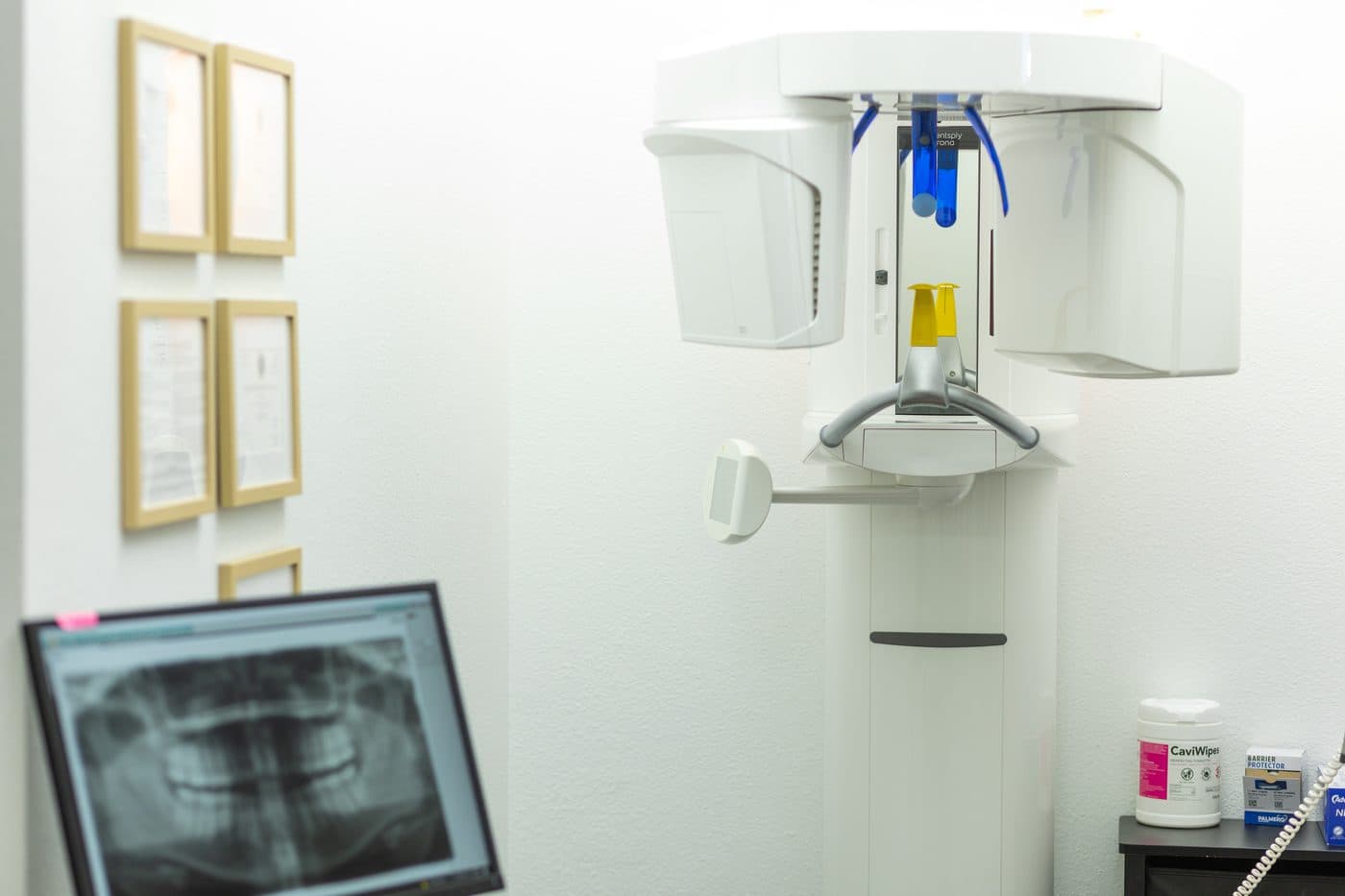
At our Mesquite office, implants are planned with an i-CAT 3D cone beam scan, which shows your bone height and width and where the nerves and sinuses sit. That turns a maybe into a real answer before you commit to anything. Implants are planned and placed here in our office, so most patients aren't sent elsewhere.
How to decide
A few honest questions help:
- How much does movement bother you? If a slipping denture would keep you from eating what you want, lean toward implants or implant dentures.
- How is your bone? A scan answers this. Thin bone can still work, but it may add a graft and time.
- What's your timeline? Dentures can be ready sooner. Implants need several months of healing.
- What's your budget now versus later? Dentures cost less today. Implants tend to cost less to maintain over many years.
- Is anything medical in the way? Tell us about diabetes, smoking, medications, and any past radiation to the head or neck.
You don't have to decide at the first visit. Get the exam and scan, and take the written options home. Most people find the choice gets a lot clearer once they can see their own x-rays.
This guide is general information, reviewed by Dr. Jose Aldana. It isn't a diagnosis or a substitute for an exam. If something hurts or looks wrong, call (972) 288-3200.