The short version
With the tooth fully numb, most people say a root canal feels like a long filling: pressure, vibration and the sound of the instruments, not sharp pain. The pain people remember is usually the infection before treatment. Expect some tenderness for a few days afterward, which over-the-counter pain relievers handle for most people. Back teeth usually need a crown after.
In this guide
- Why would I need a root canal?
- Before we start: making sure it's the right call
- Does the numbing hurt?
- What you feel during the procedure
- How you'll feel afterward
- Do I need a crown after a root canal?
- What drives the cost, and does insurance help?
- Do root canals make you sick?
- Isn't pulling the tooth easier?
Why would I need a root canal?
Inside every tooth is soft tissue called the pulp, with nerves and blood vessels, running down through small canals in the roots. When deep decay, a crack or an injury lets bacteria reach the pulp, it gets inflamed or infected. It can't heal on its own inside a hard shell, and the infection can spread into the bone at the tip of the root.
A root canal removes the damaged pulp, cleans and shapes the canals, and seals them. The tooth stays. The alternative is taking the tooth out, which leaves a gap to think about.
Signs that often point to a root canal:
- A toothache that throbs, lingers, or wakes you up
- Hot or cold sensitivity that hangs on after the food or drink is gone
- Pain when you bite down or tap on the tooth
- Swelling in the gum, or a small bump on the gum that drains
- A tooth that has turned darker after an injury
Sometimes there are no symptoms at all and the problem shows up on an x-ray. That's one reason we show you the images.
Before we start: making sure it's the right call
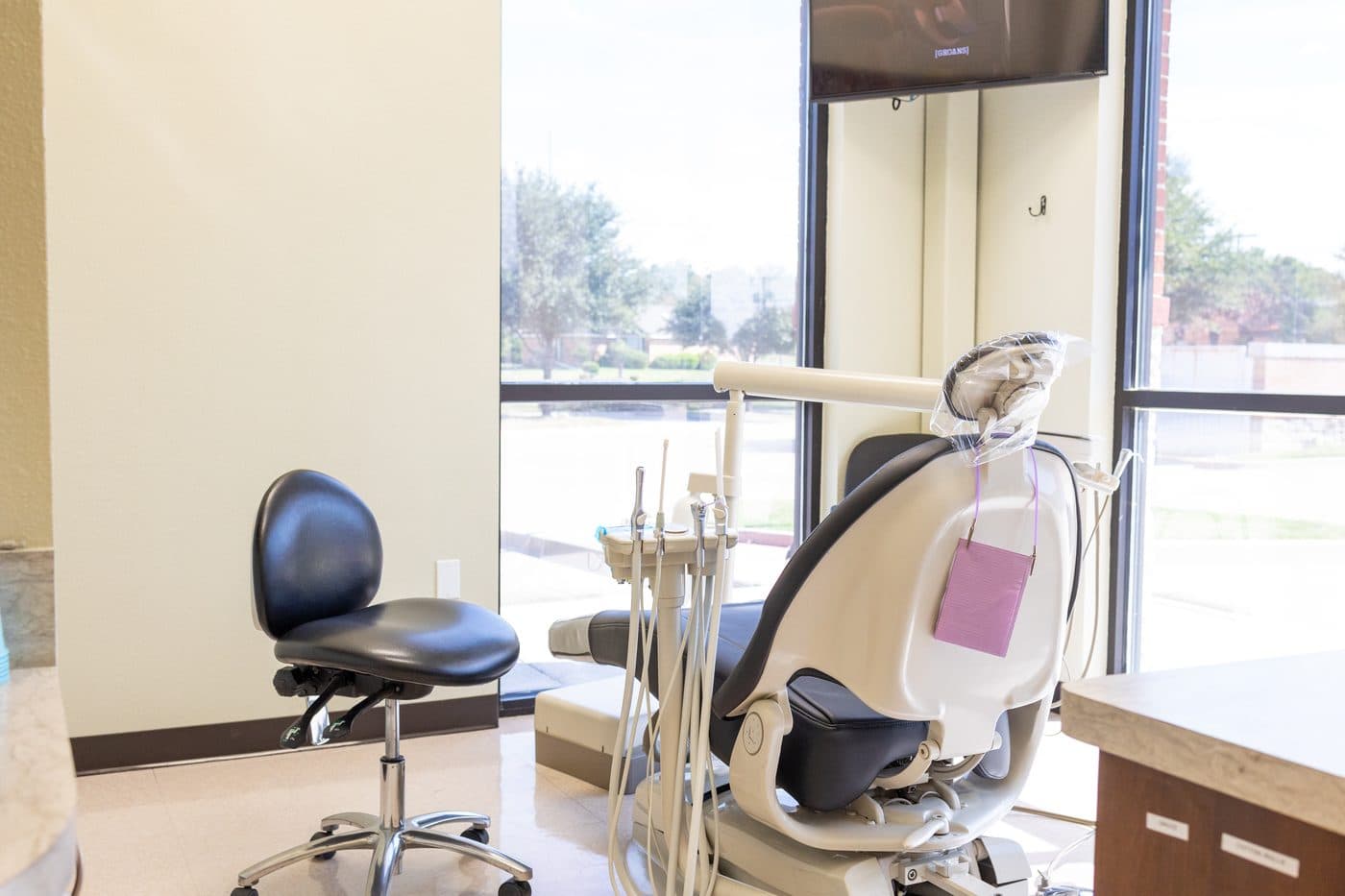
At our Mesquite office we start with digital x-rays and a few simple tests on the tooth, like how it responds to cold or a gentle tap. You'll see the images on the screen. If the tooth can't be saved, we'll say so. If it can, you'll get the options and a written estimate, including the crown if the tooth needs one.
If you're anxious, say so when you book. Nitrous oxide or oral conscious sedation can be part of the plan. Is dental sedation right for you? explains the difference.
Does the numbing hurt?
Most people feel a pinch and a brief sting, and then the area goes heavy and numb. A numbing gel goes on the gum first, and we wait for the anesthetic to take full effect before starting. You should not feel sharp pain during the procedure.
A badly infected tooth can be harder to numb, because inflammation changes the tissue around it. If you feel anything sharp, raise your hand. We stop, add more anesthetic, and wait. That's normal, and you won't be rushed.
What you feel during the procedure
Once you're numb, a small rubber sheet called a dental dam goes around the tooth. It keeps the tooth clean and dry and keeps anything from going down your throat. The dentist makes a small opening in the top of the tooth, removes the pulp, and cleans and shapes each canal with fine instruments.
What you'll notice:
- Pressure and some vibration, a lot like a filling
- The sound of the instruments and the suction
- Your jaw getting tired from staying open, which is why we give you breaks
- Maybe a mild taste from the rinse solutions
Front teeth usually have one canal. Back teeth have more, which makes them more involved. Both of our dentists do root canals, including on molars, so many molar root canals are done here instead of being referred out.
At the end, the canals are filled and sealed, and the opening is closed with a filling or a temporary.
How you'll feel afterward
The numbness wears off over a few hours. Don't chew on that side until it does, so you don't bite your cheek or tongue.
For the next few days the tooth may feel tender, especially when you bite. That's the tissue around the root settling down, not the nerve, which is gone. For most people it's mild and eases steadily. Over-the-counter pain relievers usually handle it; ask us what's right for you if you take other medications.
Do I need a crown after a root canal?
Back teeth almost always do. Once the pulp is gone the tooth gets more brittle, and molars take the most chewing force. A crown covers and protects it so it doesn't crack. Front teeth sometimes only need a filling.
Until the crown is on, go easy on that tooth. A tooth that cracks after a root canal sometimes can't be saved.
Crowns here start with a digital impression, so there's no putty tray. Your estimate shows the root canal and the crown as separate lines, so you see the full cost up front.
What drives the cost, and does insurance help?
The price depends mostly on which tooth it is (molars take longer), how many canals it has, and whether it needs a crown after. Many dental plans cover root canals as basic or major care after the deductible, and many cover part of the crown. We check your plan first and put the numbers in writing.
No insurance? The Sunshine Membership is a $110 one-time fee that takes 30 to 40% off dental treatment, with no monthly fees; ask how it applies to your root canal and crown. Sunbit and Cherry offer monthly payments.
Do root canals make you sick?
You may have seen claims online that root canal treated teeth cause illness elsewhere in the body. That idea goes back to research from about a century ago that later studies couldn't reproduce, and major dental organizations say there's no valid evidence for it. Leaving an infected tooth untreated is the real risk, because that infection can spread.
What is true: a tooth that's had a root canal can occasionally get reinfected, often because a crown or filling leaked or a crack developed. If a treated tooth starts to hurt again, it can sometimes be retreated. Come in and we'll look at it with x-rays and give you the options, including whether saving it still makes sense.
Isn't pulling the tooth easier?
It's faster on the day. It's rarely easier over time. A missing back tooth lets the teeth around it drift and tip, and replacing it later with an implant or a bridge usually costs more than saving it would have.
When a tooth can be saved, a root canal and crown is usually the better long-term choice. When it can't, we'll tell you straight and walk you through dentures and implants.
This guide is general information, reviewed by Dr. Jose Aldana. It isn't a diagnosis or a substitute for an exam. If something hurts or looks wrong, call (972) 288-3200.